
Beyond Four Walls: Designing Outdoor Learning Spaces
In recent years, outdoor learning spaces have emerged as a vital component of modern educational design. For schools across Queensland, where the climate and natural environment offer year-round opportunities for outdoor engagement, these spaces are a strategic investment in student wellbeing and educational outcomes.
Why Outdoor Learning Matters
Outdoor learning environments provide a dynamic alternative to traditional classrooms. Research consistently shows that students who learn outdoors experience improved concentration, reduced stress and increased motivation. These spaces support a variety of learning styles, particularly for kinesthetic and nature-oriented learners, and encourage collaboration, creativity, and critical thinking.
For educators, outdoor spaces offer flexibility in teaching methods and the chance to integrate cross-curricular learning—combining science, art, and physical education in a single session. They also foster a deeper connection to the environment, promoting sustainability and stewardship from a young age.
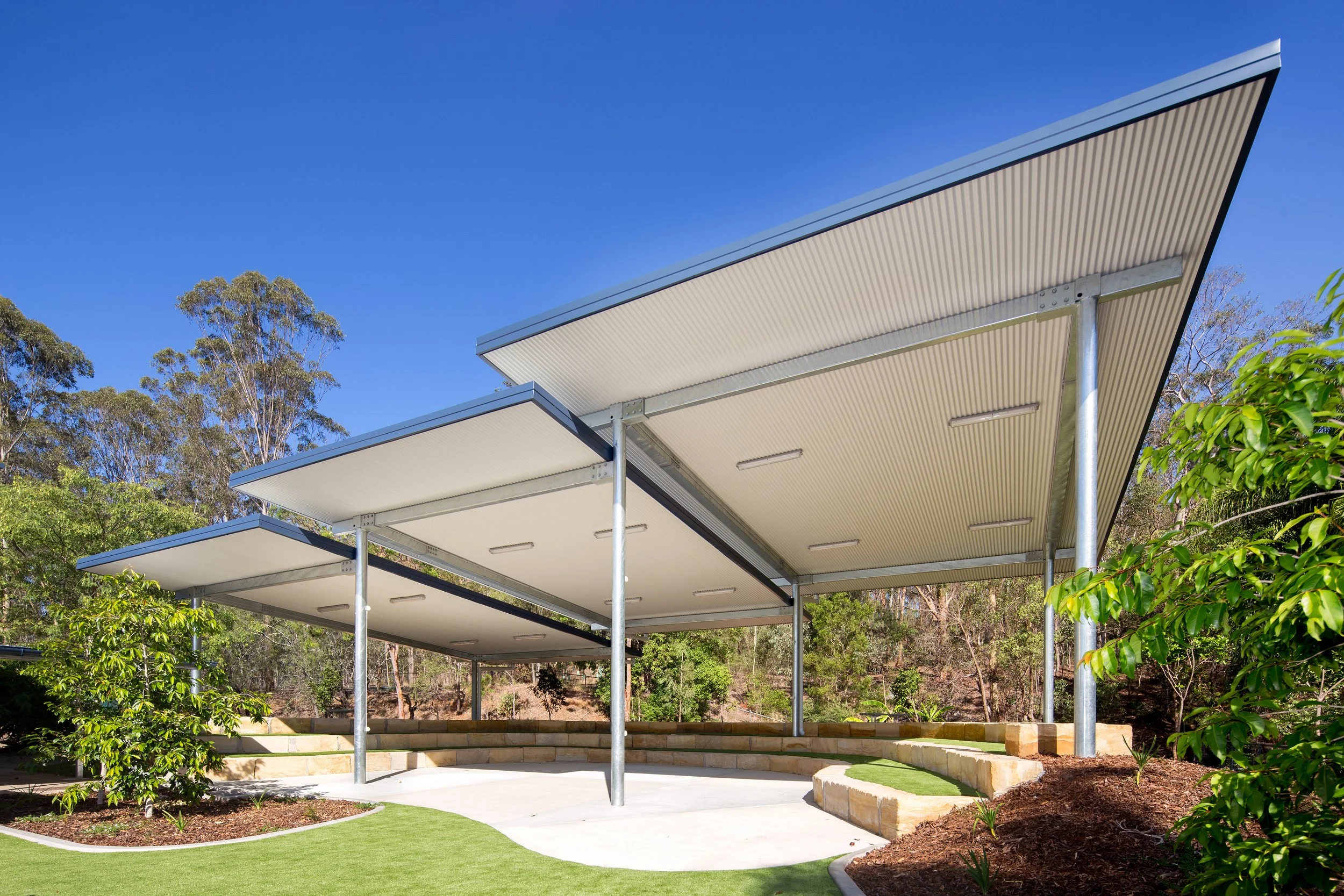
Everton Park State High School - Outdoor Learning Area. Photographer: Highshots.
Designing effective outdoor learning spaces
Creating a successful outdoor learning area involves more than placing a few benches under a tree. It requires thoughtful planning, tailored to the needs of the school community and the local environment. Here are key considerations:
Location
Accessibility: Choose a site that is easily accessible from classrooms to encourage frequent use.
Shelter and Shade: Ensure the space is protected from harsh sun and rain. Natural shade from trees is ideal, but shade sails or pergolas can also be effective.
Noise and Distraction: Avoid areas near busy roads or noisy equipment. A sense of calm and separation from the hustle of the schoolyard enhances focus.
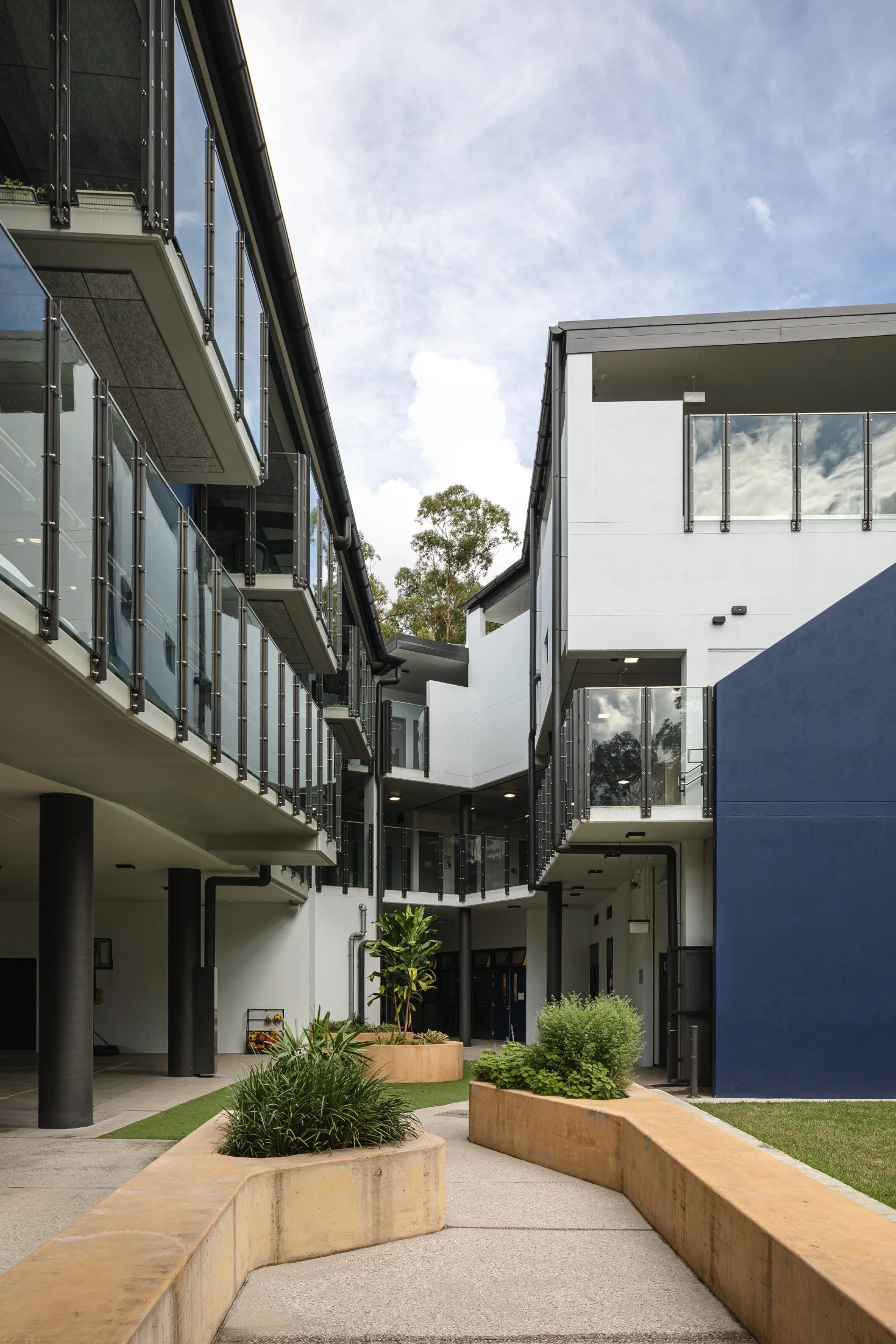
Mancel College Building 2 Outdoor learning spaces. Photographer: Cam Murchison.
Design Elements
Flexible Seating: Use a mix of fixed and movable seating—logs, benches, stools, or tiered platforms—to support different group sizes and teaching styles.
Durable, Natural Materials: Prioritise sustainably sourced timber, stone, and recycled materials that blend with the landscape and withstand weather and wear.
Zoning for Activities: Designate areas for quiet reflection, group discussion, hands-on experiments, and creative play to maximise the space’s versatility.
Nature-Based Learning
Ecological Landscaping: Use native and drought-tolerant plants to create low-maintenance gardens that attract pollinators and support local biodiversity. Consider bush tucker gardens or sensory trails to integrate learning with ecology.
Habitat Zones: Include birdhouses, insect holes or frog ponds to turn the space into a living laboratory for science and environmental studies.
Natural Play and Exploration: Use logs, boulders, and uneven terrain to encourage physical activity and imaginative play, especially for younger students.

Kallangur State School Outdoor Learning Area. Photographer: Cam Murchison.
By embedding ecological thinking into the design of outdoor learning spaces, schools can create environments that are not only beautiful and functional but also deeply educational. These spaces become living systems and places where students learn with nature.
If you’d like to see more of our projects that feature a outdoor learning spaces, check out our projects page.
Or call our studio on 07 3878 3330 to find out more about how we can collaborate to bring your vision to life.
-
November 2025
- Nov 25, 2025 Beyond Four Walls: Designing Outdoor Learning Spaces Nov 25, 2025
-
October 2025
- Oct 16, 2025 Transform Your Classroom: The Power of a Well-Designed Teaching Wall Oct 16, 2025
-
September 2025
- Sep 8, 2025 Why tuckshop design matters - and how to get it right? Sep 8, 2025
-
August 2025
- Aug 5, 2025 Is your school making the most of the facilities through effective master planning? Aug 5, 2025
- June 2025
-
May 2025
- May 27, 2025 Why we love entering our projects into architecture awards (our reasons go beyond mere vanity!) May 27, 2025
-
April 2025
- Apr 22, 2025 April is Autism Acceptance Month Apr 22, 2025
-
March 2025
- Mar 4, 2025 Giarola Architects’ promotes inclusivity in education, by design Mar 4, 2025
-
December 2024
- Dec 20, 2024 Kallangur State School wins a prestigious Learning Environment Queensland Award in 2024 Dec 20, 2024
-
August 2024
- Aug 9, 2024 A ground-breaking POE study highlights design strategies that enhance inclusivity in education Aug 9, 2024
-
June 2024
- Jun 18, 2024 Our Gin Gin SHS project recently won two awards Jun 18, 2024